SREBRENICA
In the early days of July 1995, Bosnian Serb forces under the command of Ratko Mladic began attacking and overrunning the UN protected safe area of Srebrenica. The 110 Dutch UN troops that were stationed there to protect the enclave stood by as Mladic’s men swept through. The majority of the men in Srebrenica, up to 20,000 of them, decided to try to escape the enclave and set off through the hills in an attempt to reach Tuzla, which was under the control of Bosnian Government forces. The path they took later became known as the ‘road of death’. Many thousands were killed along the route as Serb forces ambushed and shelled the column. Those who stayed behind gathered near the Dutch base in Potocari and it was here that Mladic’s men separated the remaining men and boys from the women and marched them away to be shot under the noses of the Dutch troops.
It was the worst atrocity of the Balkan wars and the effects of the massacre are still being felt today. Thousands of bodies remain missing,

A mass grave near Sekovici containing the bodies of Bosniak men thought to have been killed in the massacres in and around Srebrenica in 1995. Most of the bodies had their hands tied behind their backs with wire. This mass grave was exhumed in 2006.

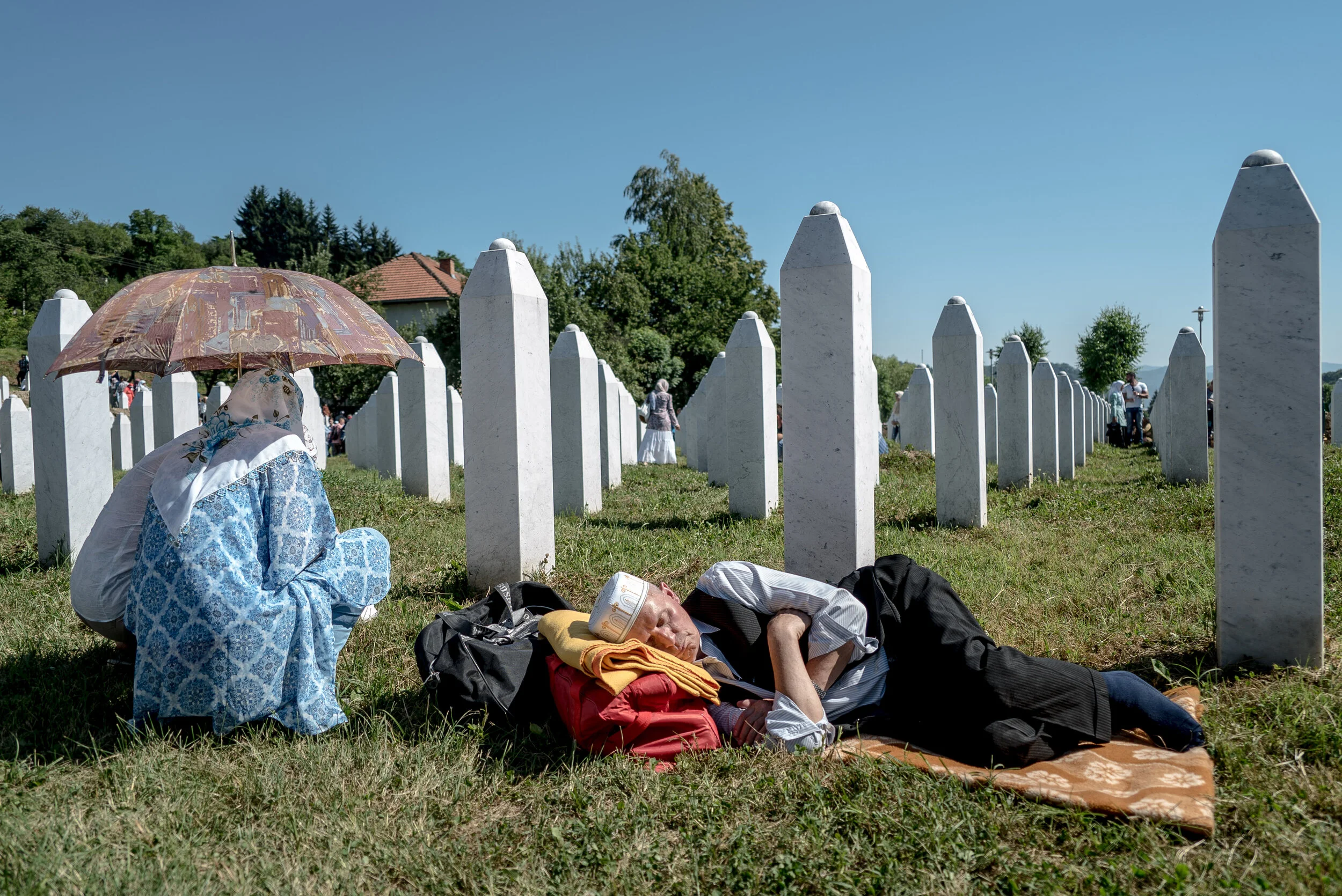
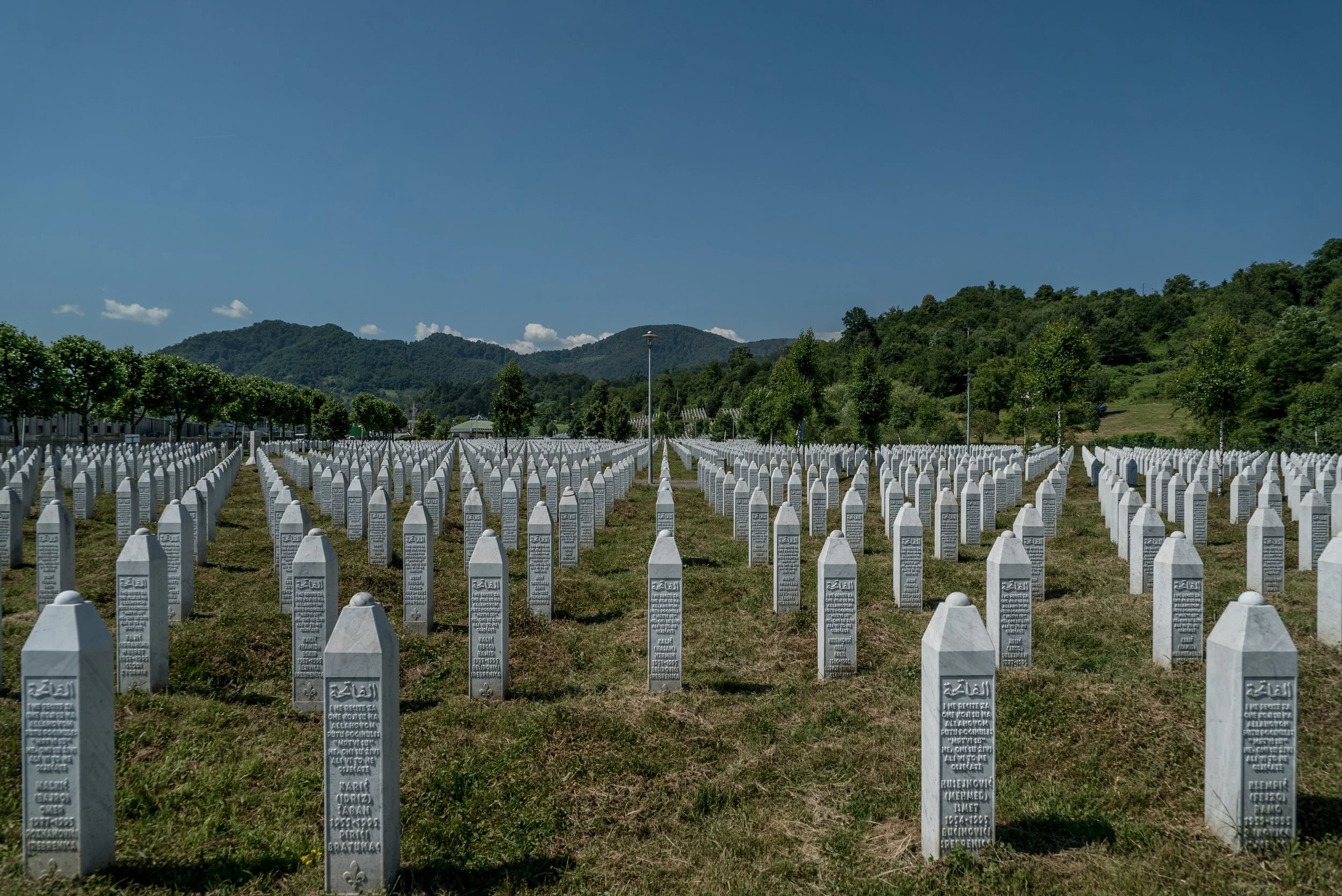
The graveyard at Potocari for the victims of the Srebrenica massacre, photographed in March 2005.

March 2005.
The warehouse at Kravica where an estimated 1000 Bosniak men and boys were executed after being captured along the 'road of death' while trying to escape from the Srebrenica enclave.

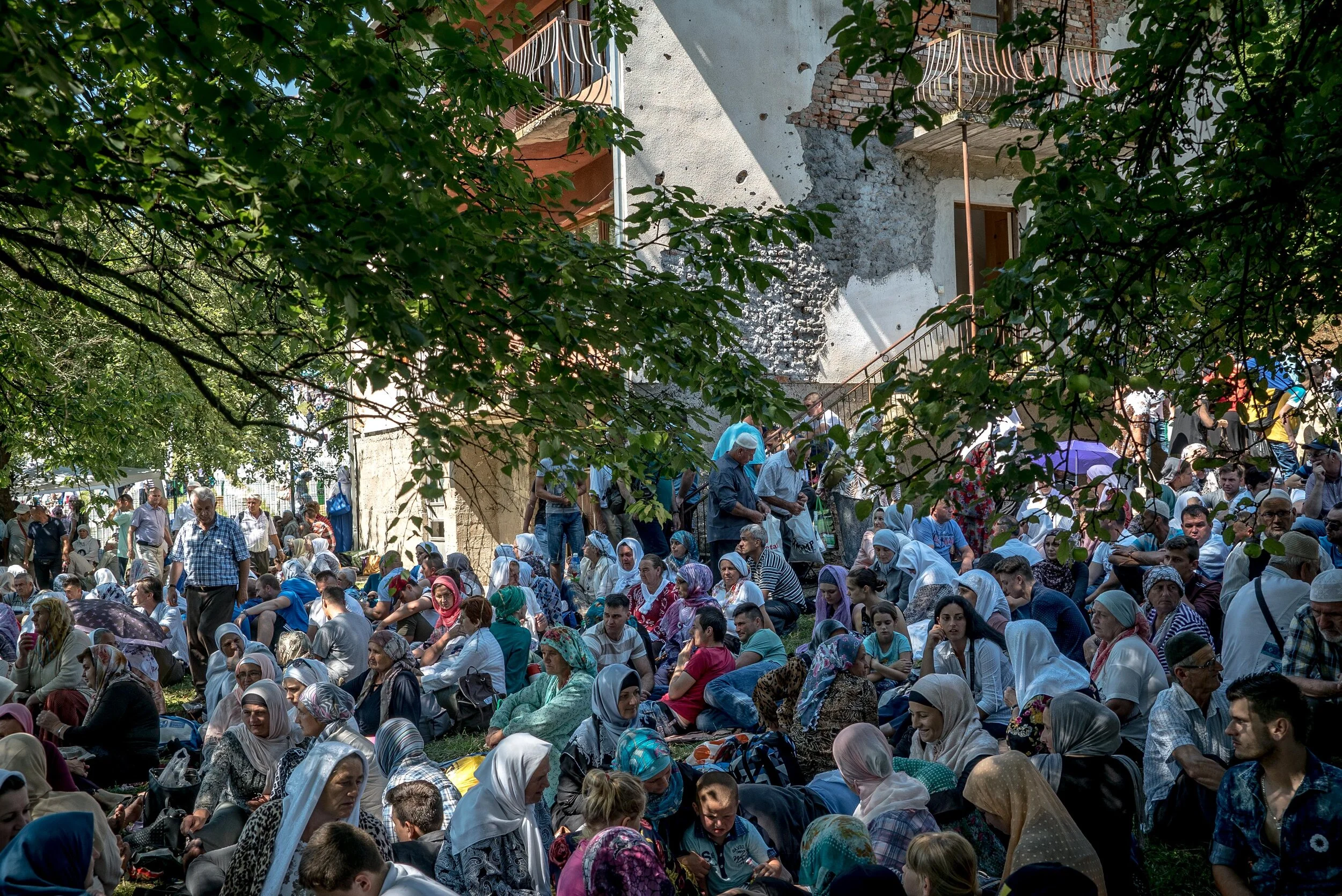

The site of a mass grave at Tomasica. So far more than 400 bodies have been exhumed at the site, but authorities believe many more may be buried there.


ICMP (International Committee for Missing Persons) workers train on a synthetic skeleton at a mortuary facility in Visoko, near Sarajevo.

Belongings of the dead that were unearthed with their bodies at the Krajina Identification Project in Sanski Most.

The remains of people massacred during the Bosnian war are laid out on tables at the Krajina Identification Project in Sanski Most.
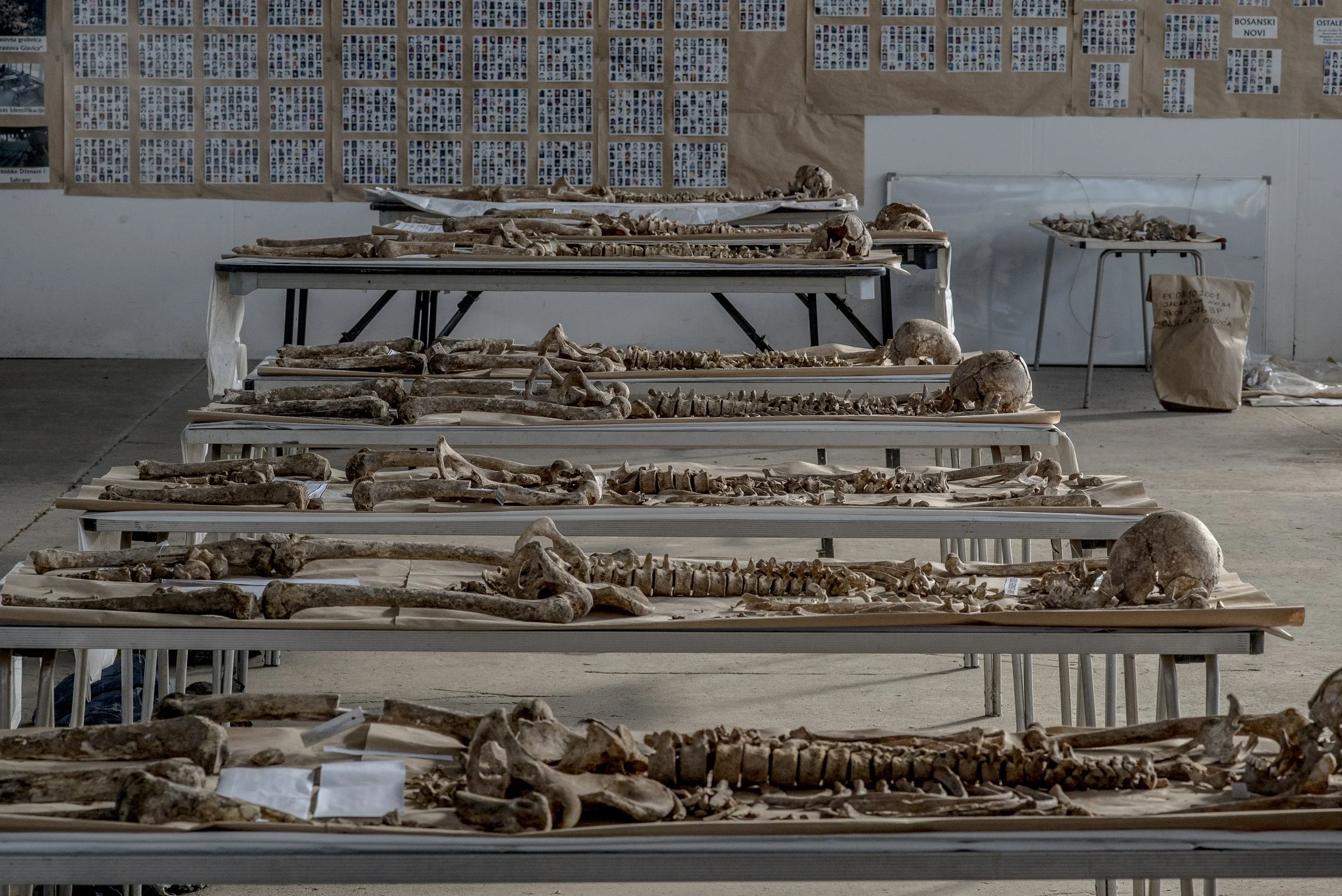
The remains of people massacred during the Bosnian war are laid out on tables at the Krajina Identification Project in Sanski Most.

The remains of people massacred during the Bosnian war are laid out on tables at the Krajina Identification Project in Sanski Most.
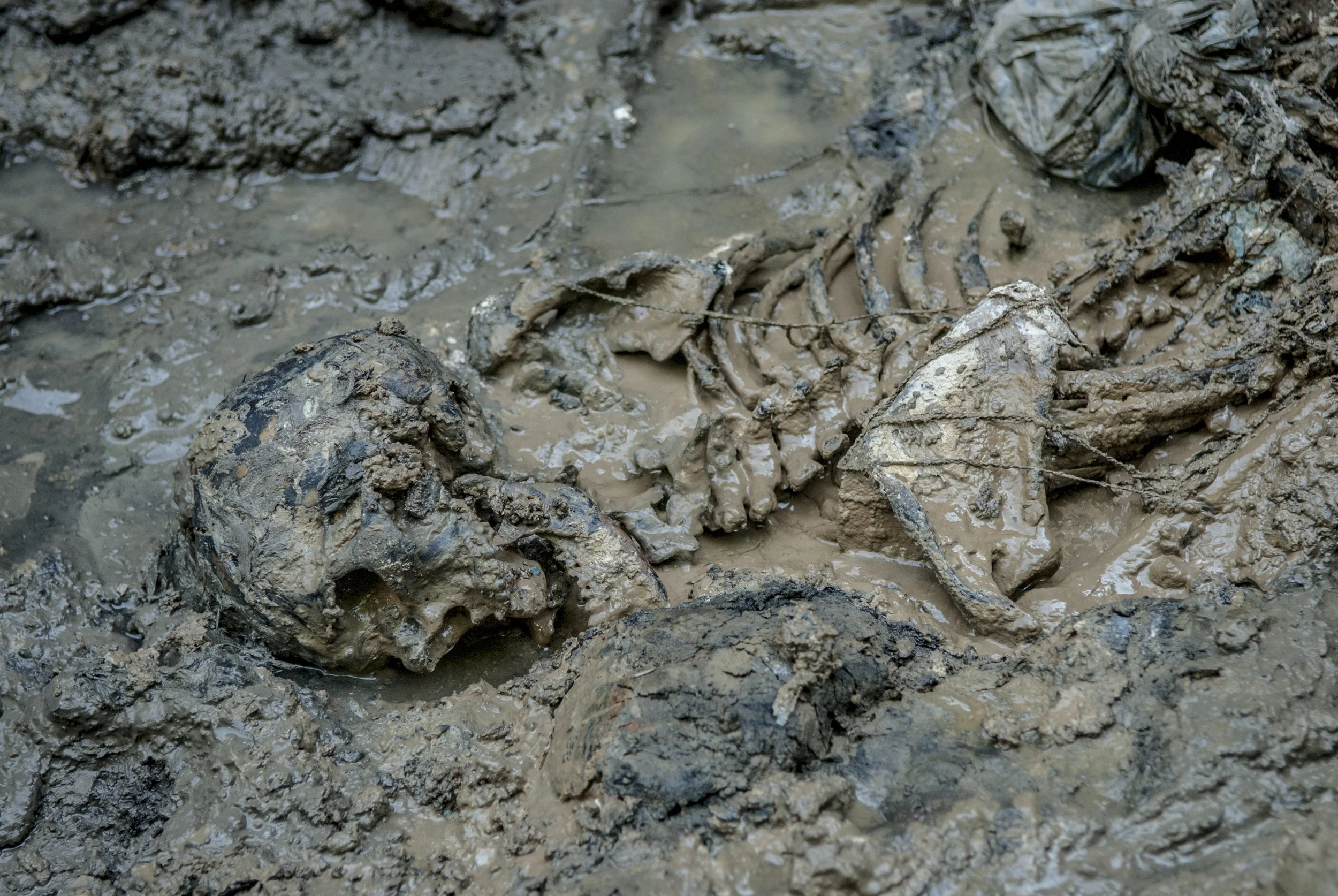
A mass grave near Sekovici containing the bodies of Bosniak men thought to have been killed in the massacres in and around Srebrenica in 1995. Most of the bodies had their hands tied behind their backs with wire. This mass grave was exhumed in 2006.
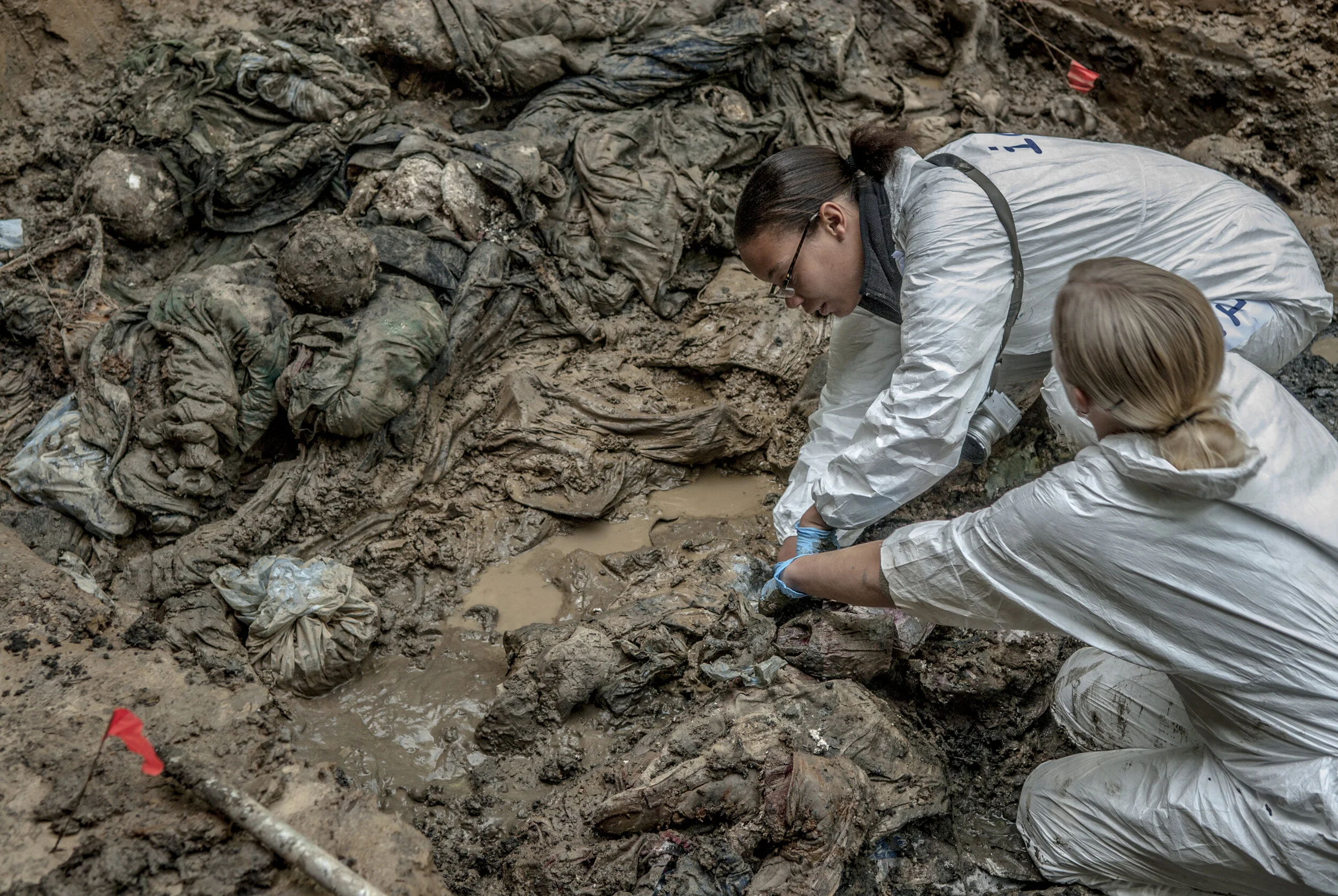
A Forensic Archaelogist and a Forensic Anthropologist from the ICMP (International Committee for Missing Persons) exhume the bodies of Bosniak men executed during the Bosnian war from a mass grave near Sekovici in Republica Srpska. It is suspected that the men were murdered during the Srebrenica massacre in 1995, most of the bodies exhumed had their hands tied behind their backs with wire.


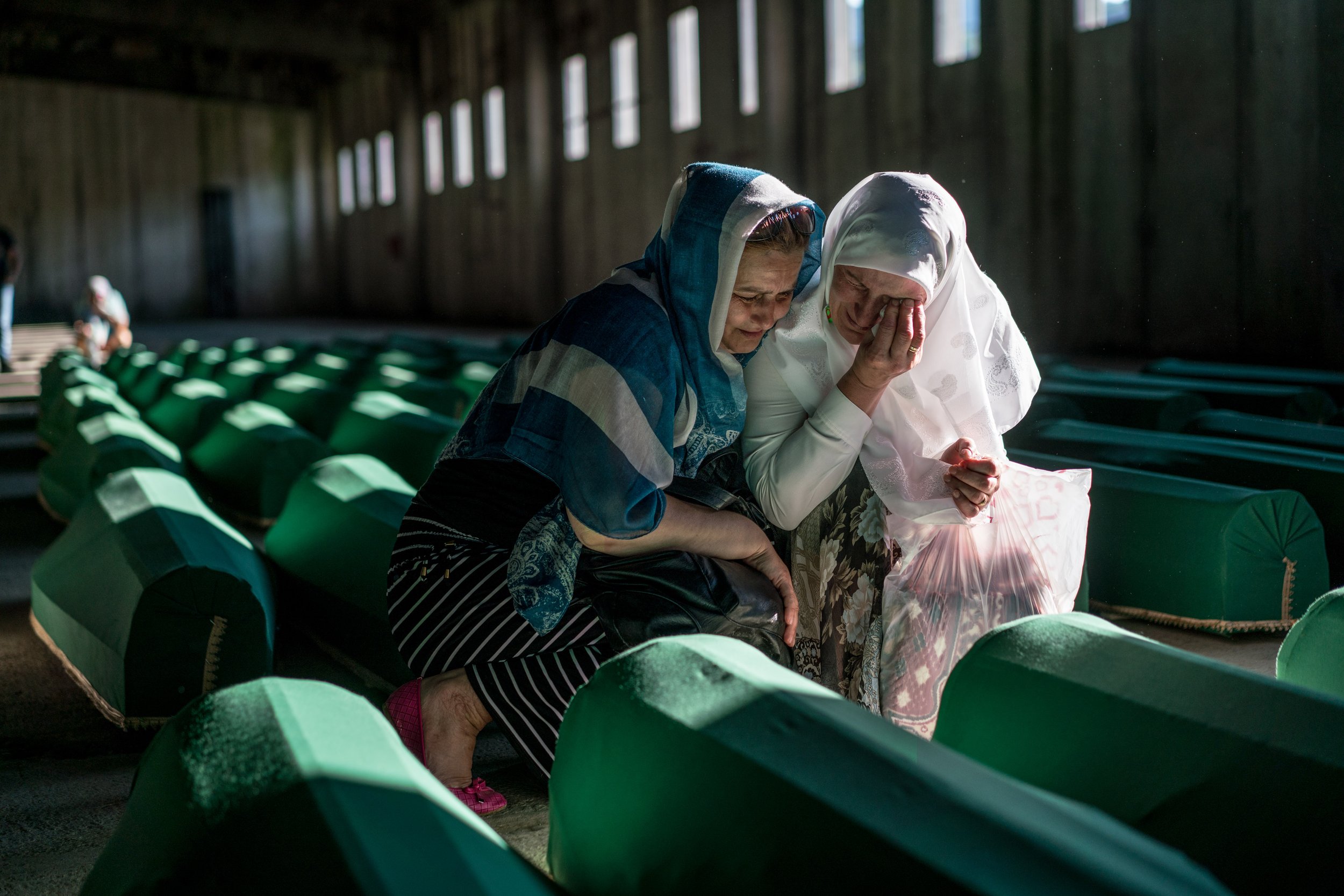
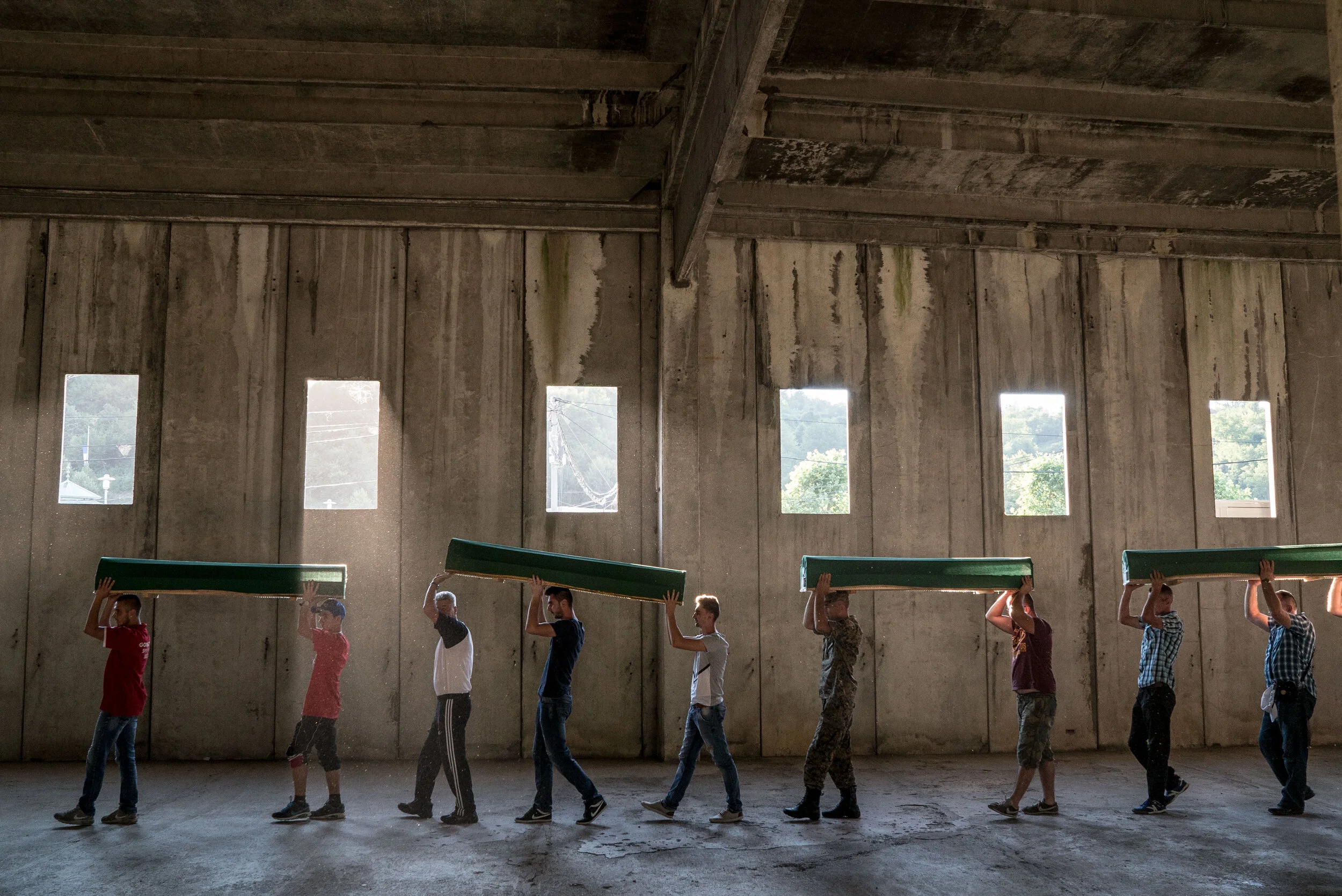
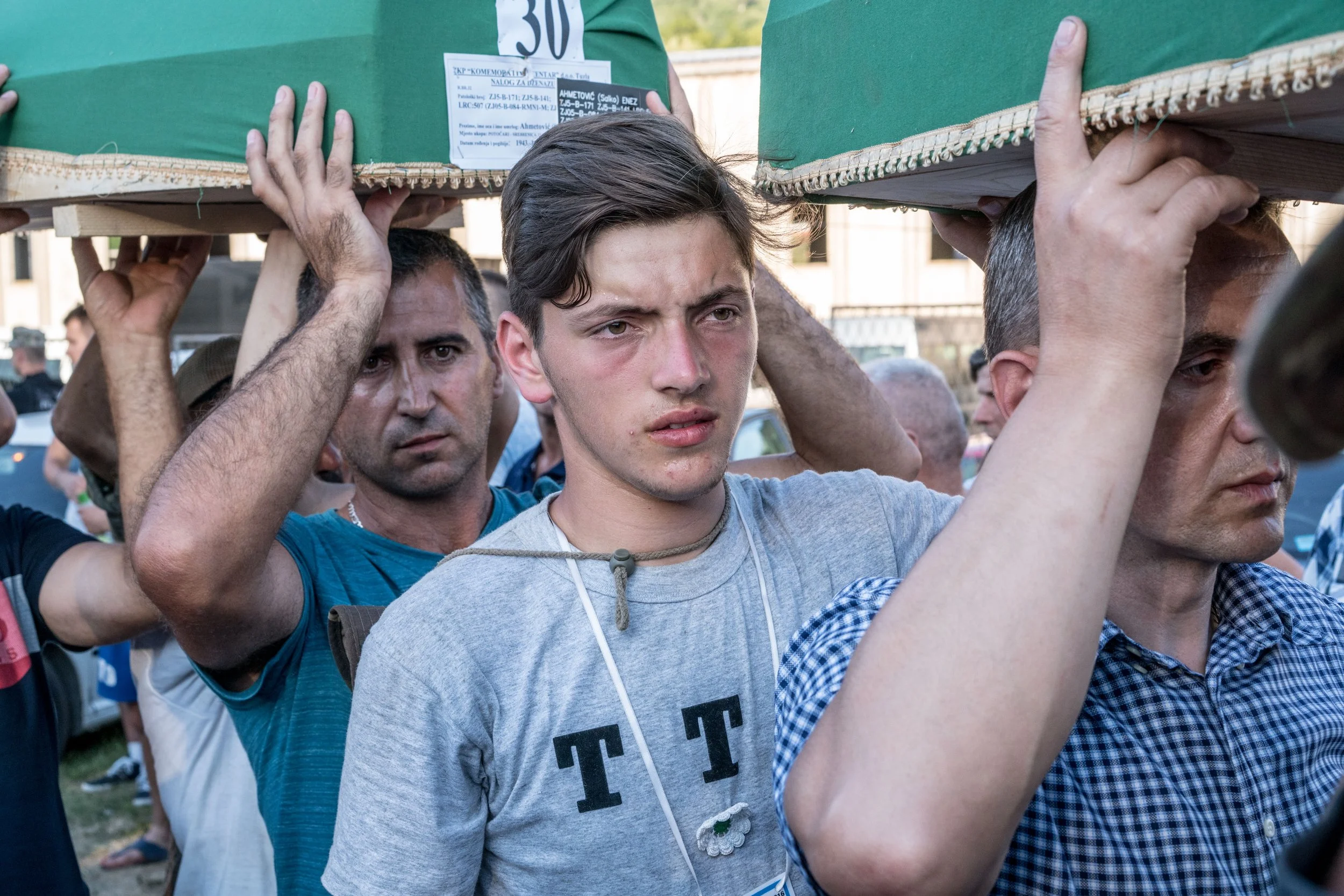
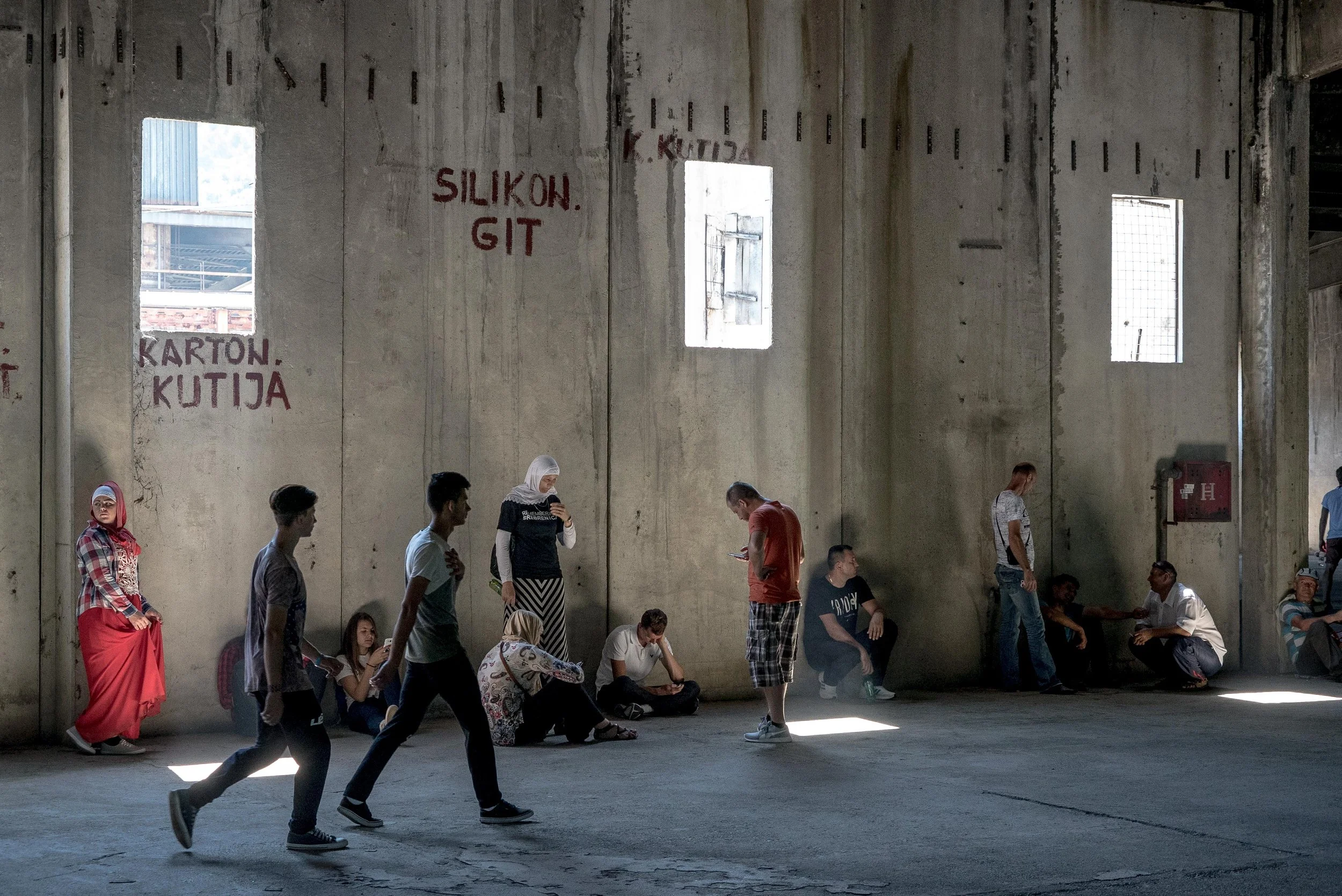
A young boy prays over one of the nearly 600 coffins containing the remains of Bosniak men and boys that were placed in the Battery Factory in Potocari in preparation for their burial on the 11th July, the tenth anniversary of the Srebrenica massacre.


A snow covered field near Srebrenica that was the site of one of the massacres of Bosniak men and boys in July 1995. Mevludin Oric survived the massacre here and then escaped during the night.

Women from Srebrenica look through the Red Cross identification book for traces of their menfolk who disappeared without trace during the Serb attack on the town five years previously in 1995.
Before the ICMP introduced DNA testing, books such as these were one of the only ways that bodies could be identified.

The apartment block in New Belgrade where Ratko Mladic is reputed to have lived in hiding during his years as ‘Europe’s most wanted man’.
a Back to Work